.
Along the north shore of Lake Balaton in western Hungary, on one of the low green hills that overlook the arc of the lake to the south, seeds of a multi-layered community, artistic, and ecological regeneration are being sown by colleagues from Moholy-Nagy University of Art and Design (MOME). Through an emergent project called MOME MAG, they are establishing a transdisciplinary regenerative approach to being with land — land sedimented in volcanic and limestone soils, anthropocentric histories of cultivation, and long eco-cultural interspecies collaborations among farmers, grapes, almonds, cherries, and more.
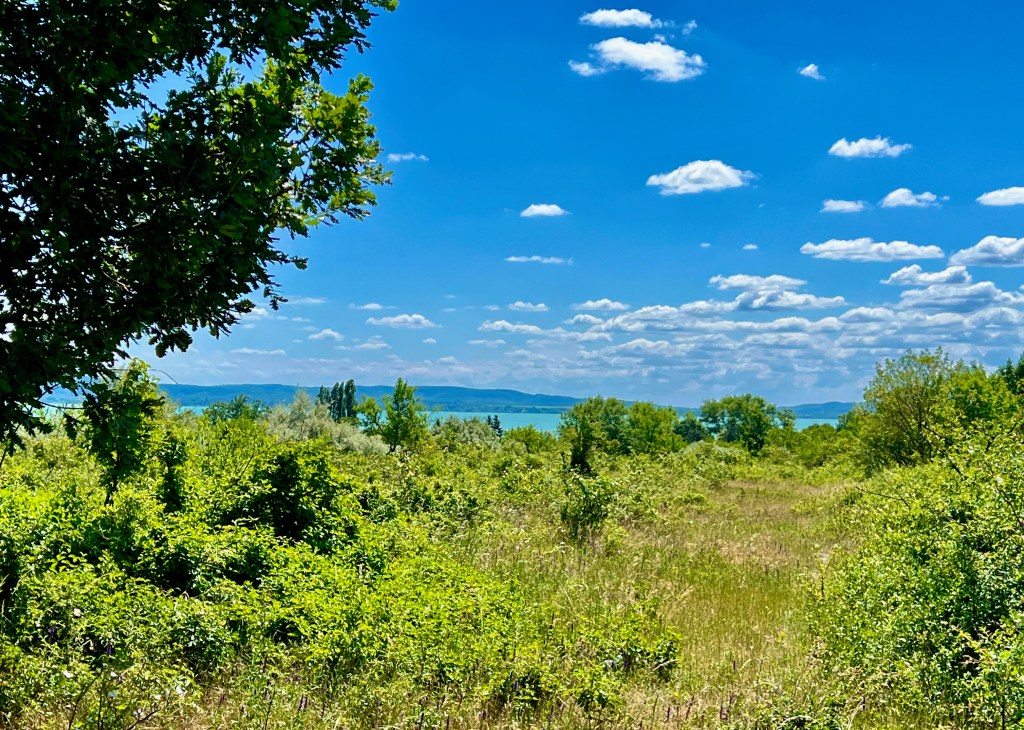
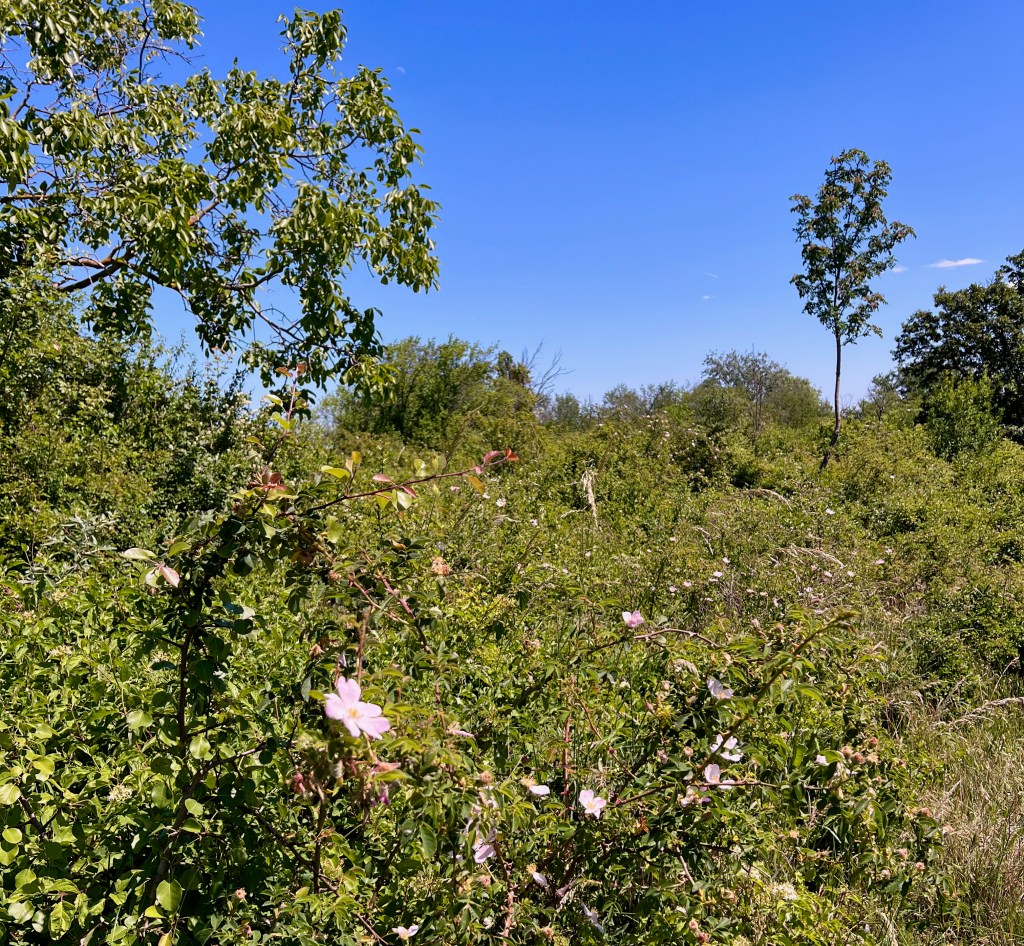
This new chapter for four hectares of decades-neglected land now home to rose-hip thickets, blackberries, and a surfeit of green exploding from every corner — all girded on the south by the brilliant aquamarine of Hungary’s largest lake. The occasional oak and almond tree, an errant feral grape vine, and well-guarded hawthorns fairly vibrating with bioabundance. Nearby, fields of lavender and poppies, groves of pomegranate and olive trees, and very productive vineyards shape the flavours of region — and suggest why some might aspirationally imagine the landscape as more mediterranean than its reality. Reveling in the warmth and aromas of the afternoon sun on the roses that proliferate here was enough to encouraging some aspirational thinking of our own.
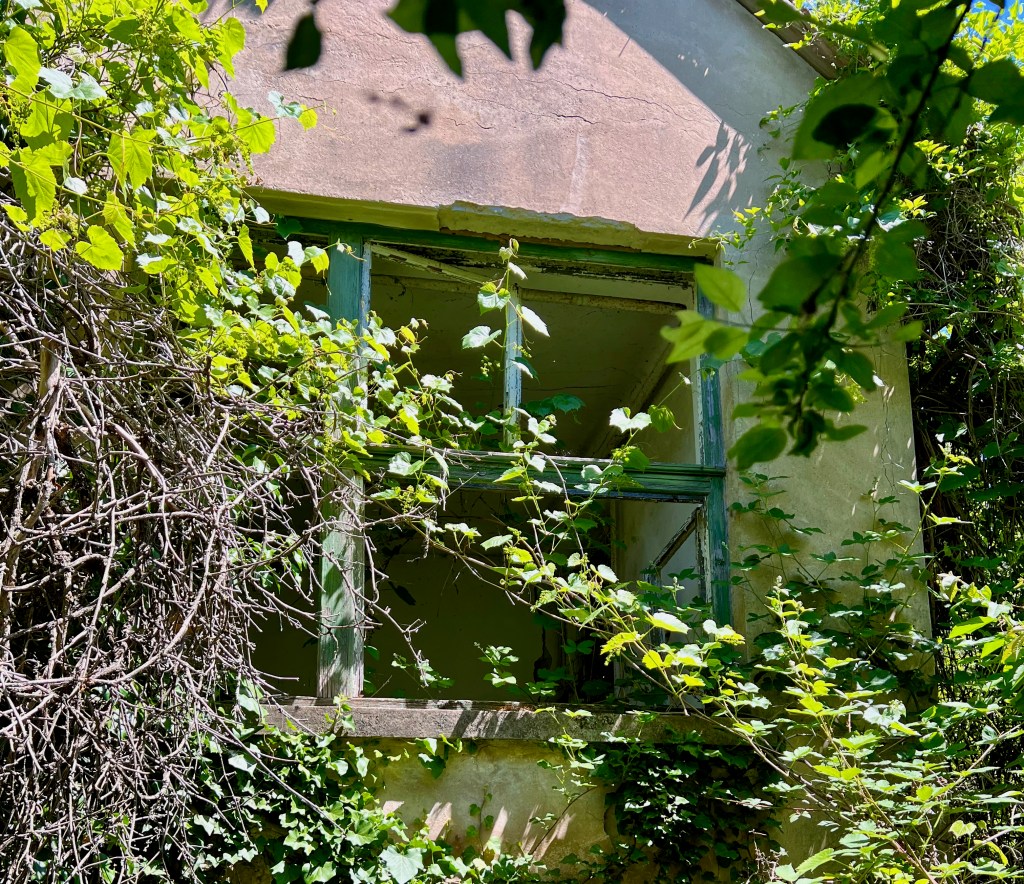
At the edges of the MOME MAG property are the decaying remnants of a different history of land use — a 1950s Soviet experiment in growing citrus [LINK], which, in a region where the average low temperatures are below freezing three months of the year, was a labour and energy-intensive approach to agriculture that is by almost any measure entirely the opposite of regenerative or sustainable.
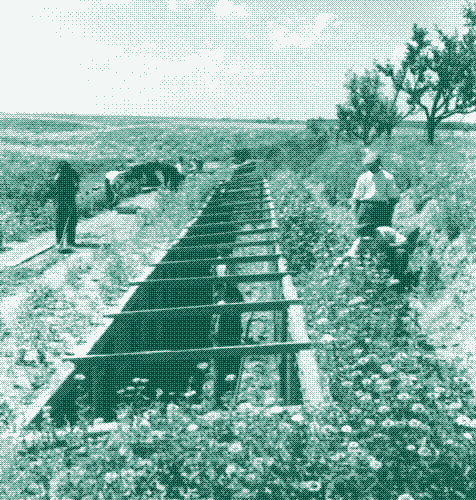
The 1950s infrastructure is both indelibly written into the thin soil itself, as the project included both heated glass houses and deep trenches to shelter the fruit trees from the elements. The project also experimented with low-lying creeping varieties as a way to minimize exposure to the elements of the often challenging Hungarian weather. Ultimately, the project was unsuccessful on many levels (although the term “Hungarian Orange” persists — in Péter Bacsó’s 1969 film, A Tanú (The Witness), a character proudly shares: “The new Hungarian orange. It’s slightly yellower, it’s slightly sharper, but our own” — and in the title of the liberal-learning newspaper, Magyar Narancs, as a nod to something of a fools’ errand).
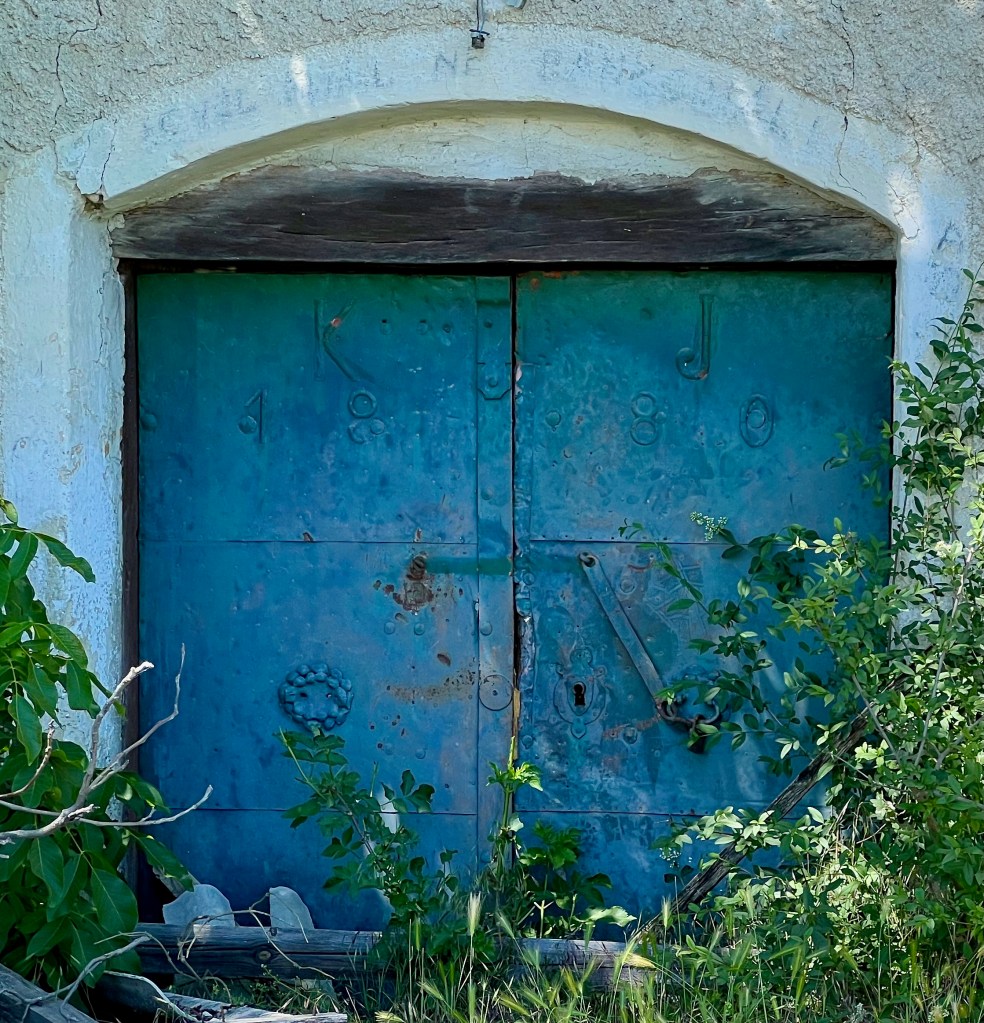
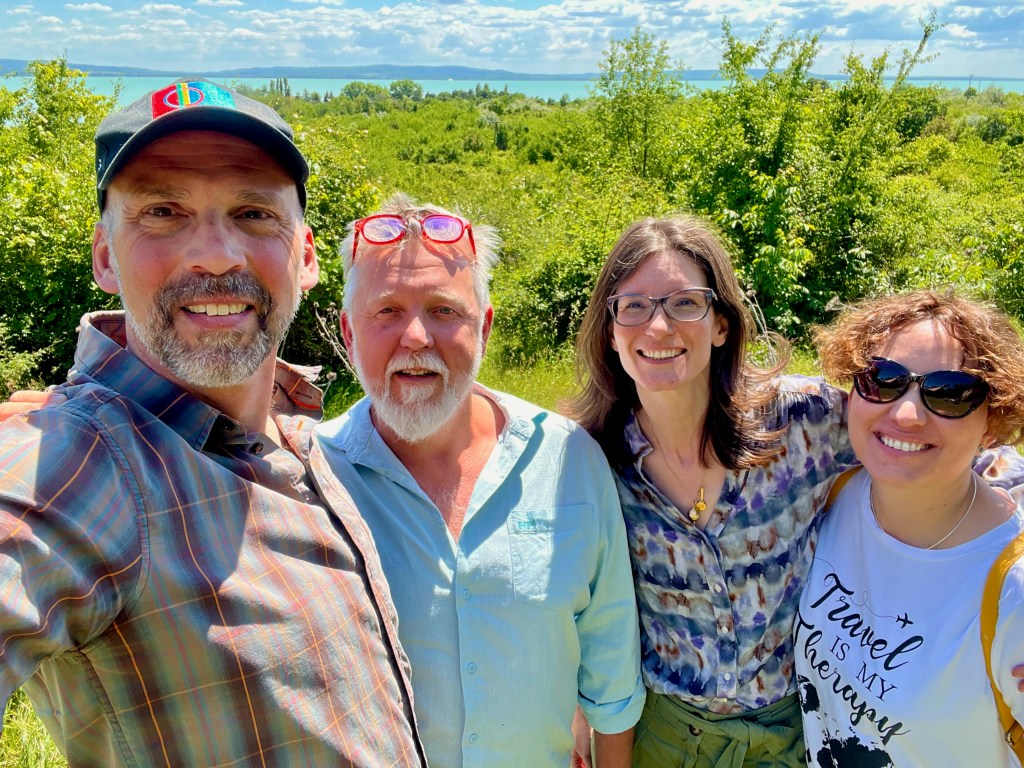
Earlier this week, with my friends from MOME, we explored the centres and periphery of this re-emergent landscape and imagined more holistic, socio-ecological and integrative approaches to being with land, to dwelling, to blurring inner and outer capacities as we learn to inhabit the alive spaces where human and more-than-human combine. Among both the open many-layered greens of the southward slope to the lakeshore punctuated with detritus of 75 year-old glass houses and centuries-old wine cellars, the land was inviting us into place, history, and ways of imagining. We poked around a little in the ruins of the glass house, and I imagined we might find some feral lemon trees creeping along the crumbling walls. Alas, no lemons — or oranges or grapefruits — but I look forward to the fruits that the MOME MAG team will grow there in the years to come.
Lászlo Moholy-Nagy, one of the leading voices of the Bauhaus in the 1920s — after whom MOME University is named — invited artists to explore and engage with “openings and boundaries, perforations and moving surfaces, [to] carry the periphery to the center, and push the center outward” and to move “from mass to motion … from pigment to light … from restricted closed spaces to free fluctuation of forces.” So much has changed in the century since he wrote these words, and as we find ways to put into practice our evolving narratives of complexity, sustainability, ecological systems, network design, social and environmental justice, and regeneration, Moholy-Nagy’s New Vision nonetheless continues to be a an exciting and urgently relevant framework for thinking — and putting into practice — a relational, process-based and interwoven socio-ecological paradigm.
“If the broad line of organically functioning life is once established … then no work — as often the case today with industrial production and its endless subdivisions — could be felt as the despairing gesture of a man being submerged. All would emerge as an expression of organic forces.”
Understanding these forces begins with being with the stillness of self and place.
Over the three days of the Cumulus conference at MOME this week, hundreds of participants from around the world shared dozens of inspiring projects from user experience design to interior architecture, social design to critical design, systems and network design to curriculum design and much more. As I noted in my own Cumulus talk on Hybrid Ecological Networks, I noted a context of crisis insinuating many of the conference sessions — whether climate crisis, humanitarian crises, ongoing armed conflict, threats to democracy, the rise of far-right nationalism, and more — there is little doubt that we are engaging daily in a shared and compounding polycrisis — recently defined by Adam Tooze as “so disorientating is that it no longer seems plausible to point to a single cause and, by implication, a single fix.”
Regenerative design thinking has much to offer our collective understanding, sharing, and engagement with the polycrisis — Donella Meadows wrote that our understanding of systems arises “from shared social agreements about the nature of reality” — which suggests that immersive, authentic experience and engagement with that reality is a key to changing how we engage with systems and, in Meadows’ words, how we dance with them.
Experience is the foundation for regeneration — and shared experience the pathway to collaborative systems change. What Moholy-Nagy saw in sculpture, space, and light, with “relations extending in all directions as a fluctuating play of forces” we can see again (still?) as an ever more urgent invitation toward openness, co-creation, adaptability, empowerment as a way to shift our frame to recognize we are, in Matthew Tiessen’s words, “articulations and expressions of their environments. Each of us is a site-in-process, a crossing, where forces come to play.”
As we learn to cultivate stillness in this place and listen to what the wind shares with the almond, oak and hawthorn trees we develop together “a many-sided sureness” with this land — while it inhabits us and leaves its traces in our heads, hearts and hands. The braided histories of this land will forever be entwined with/in us, our experience, and through the soil of these south-facing slopes above Lake Balaton and will also become willing, thoughtful, and conscious collaborators in our shared process of regeneration.

 Regenerative Learning Network
Leave a comment