Rachel Sweeney
As we approach the 100 year mark of the Elmhirst’s legacy on the Dartington Estate in Devon, South West England, there is an opportunity to critique the lineage and direction of arts and environmental education at Dartington through recent notable developments, forming out of the past 5-10 years, and perhaps fortunately aligning as we approach the centenary, which can be seen to reanimate community perspectives, embrace new embodiment practices supported through ecological thinking and environmental concerns, and widen international and global interests.
In 1925, Dorothy and Leonard Elmhirst established a community of international artists at Dartington, bringing together a melting pot of regenerative farming techniques, contemporary arts and crafts practices, movement and music studies, literature and composition. Underlying all of this research, was a deep commitment to using the arts as a vehicle for change and embedding social and ecological justice values alongside creative experimentation and interdisciplinary collaboration. Though fermented through the healthy and well-endowed philanthropic support of Dorothy’s own fortune, the Elmhirsts’ direct actions, guided by their good friend Rabrindrinath Tagore, fuelled a life time vision on the Dartington estate, supporting both artistic and ecological enterprise, and providing a sanctuary for artists all over the world to come together to share and exchange their creative ideas within a safe and sheltered environment, far away from the rising tide of fascism that was sweeping across Europe and the wider world in the run up to World War Two.
And it is these founding principles that have fed the teaching and learning until now, aligning artistic and ecological thinking around social justice, and grown out of the considerable strengths of a longstanding progressive ecological community embedded in Schumacher College’s own history, and combining with the legacy of Dartington College of Arts. My own personal relationship to the Estate weaves across four decades. I was initially attracted here in the early nineties through a program of experimental and collaborative performance practice, offered through the three-year Theatre Studies BA Degree program at Dartington College of Arts (1971-2010). Here, I formed a lifelong interest in performance anthropology, embedded alongside social justice values in art, and birthed through a creative artistic journey that has always identified contemporary performance practice as a critical tool for social change, as a vital means of unpacking lived artistic processes as a microcosm of human and non-human relations, and as a means to contest power structures and to engage and inform a place of embodied ethics.
My own teaching in the expanded field of movement studies is what brought me back to Dartington, initially to take up the post of MA Program Lead for the Masters in Movement Mind and Ecology at Schumacher College in 2021. This program formed part of an expanding and ambitious both formal and informal education offer, developed over a thirty-year period, and drawing on the cognate fields of holistic science and environmental philosophy to encompass Regenerative Food and Farming, Ecological Design Thinking and Regenerative Economics.
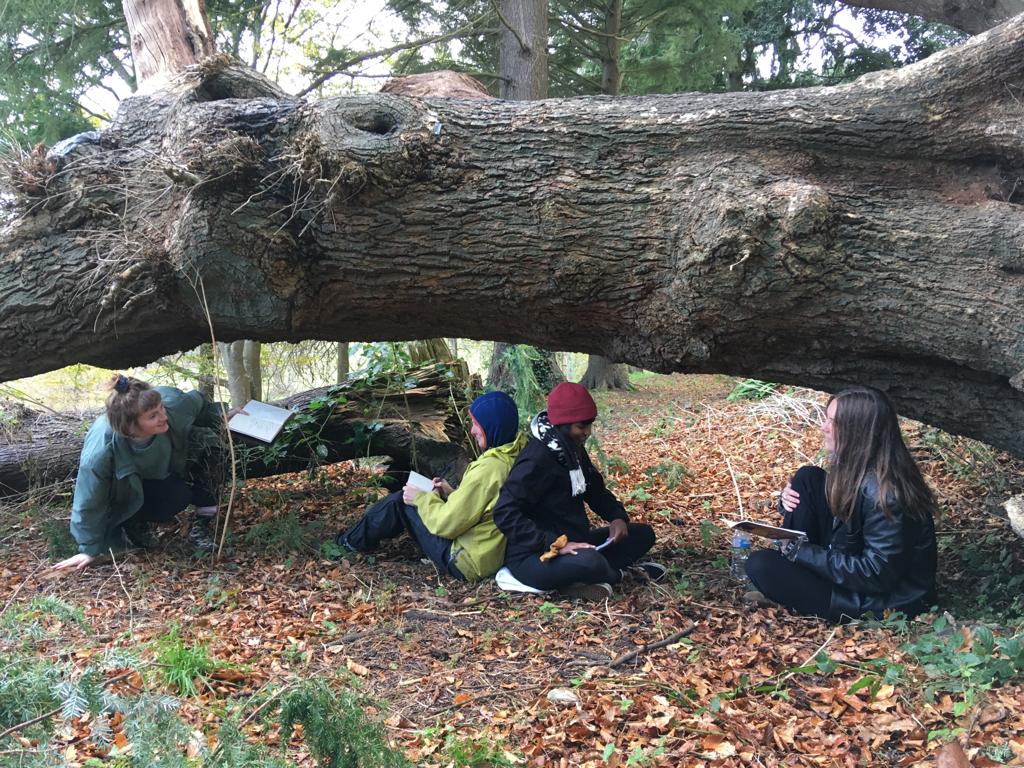
Since aligning my own thirty-year history of teaching and arts making with Schumacher College’s own expanded ecological movements, my own artist/academic pathway has been dismantled, upturned and urgently realigned within this new arena of genuinely lived transformative hands, head and heart education, that carefully directs the voices, souls and energies of countless students within a broad curriculum of experiential and collaborative learning. To move forward in the current Higher Education demands the constant adaptation of a learning landscape. When I first joined Schumacher College in 2021, it was as part of a growing and ambitious curriculum portfolio, with established Master’s degree low residency programs allowing for intensive learning across Regenerative Economics, Ecological Design Thinking, Poetics of the Imagination and Arts and Ecology. A longer arc of a learning journey could be found in the firmly established year-long Master’s program Engaged Ecology, while the newly forming undergraduate BSc program in Regenerative Food and Farming allowed students to evolve their research and practice working alongside an seasonal and seasonal bio-rhythmic pulse of the equally established Growers program, yielding a genuine farm to fork understanding of the complexity of food sovereignty in our rapidly changing climate. My own teaching throughout a creative arts agenda had always remained committed to unpacking definitions of ecology through deep adaptation methods crossing arts and science disciplines, where I am passionate about educating students to think critically about their subjects in relation to social justice and current environmental agendas.
The complex and often chaotic interweave of practical learning that I experienced in the learning community at Schumacher, scaffolded by intensive injections in the form of low residency blocks of postgraduate learning, and fed by an annual crowded calendar of public workshops, residencies, seminars and community events, these diverse learning platforms formed a delicate and interwoven curriculum of activist scholarship. Fuelled in warm bellies filled with soup, and harvested daily in the actions, intentions and offers of kinship learning, further embedded with ecological literacy and a philosophically robust agenda for embodied activism at the root of social change, my own widening field of teaching and learning encountered a kind of simulacra emerging from the synergies of these interwoven Master’s programs. The heavy mix of overlapping low residencies merged together a cacophony of furtive and fast fused experimentation, emerging, dissolving, slipping into other forms, translating into other spaces, meeting with other voices. And this is perhaps the blessing and the responsibility of these short and powerful times that we spent together.
So, this great learning project encourages us also to hold a kind of dispositional ethics of unknowing, to committing this journey that you started digesting, through the continuing to learn and to unlearn by processes of rooting, baking, weaving, harvesting, spinning, etching, dancing…. to unearth a landscape of the yet to be formed, through what Timothy Morton describes as 'wiggle-room' ; to make space for manoeuvring and reimagining
 existences in the face of polycrisis.
Three years into the development and successful recruitment of an interdisciplinary Master’s program in Movement Mind and Ecology, that seemed to tap into Dartington’s own embodied history – pushing the boundaries of socially and ethically responsive moving bodies, furthering definitions of embodied activism, and outlining new propositions for movement at the forefront of ecological thought – my own program, along with five Master’s plus one BSc program, was abruptly brought short. Literally, put on freeze at the bustling and chaotic start of a new term that welcomed over 80 postgraduate students, many of whom had travelled countless miles, invested savings, organised complex living arrangements and fully embraced their new learning adventure. Ernst Schumacher’s seminal work ‘Small is Beautiful’, though written in a scholarly arena yet to gain feminist and decolonial insights, offers what still remains a pertinent socio-ecological critique for an economic condition that might function at scale rather than speed, making things smaller, and more simple. So here at Schumacher College, this past year has been one of figuring our own scale, feeling our new form, and finding the right fit, and small, though beautiful, has perhaps never felt so vulnerable.
Facing a prospect of no new students for the interim future, colleagues were speedy to adapt to new tasks, co-deliver a swift growing portfolio of short courses, workshops, public seminars and creative exchanges, and oversee new developments on site, maximising our studios and spaces with public lunches, artist residencies and writer and researcher residencies. In the absence of responding to the continuing rise of recruitment figures that would otherwise entail a 2024-25 postgraduate community, while our current cohort of registered students got busy with seeking accountability from their educational governors, learning colleagues began to dream up a new kind of program that might work outside of the parameters of a stringent and demanding international student the visa system, whilst delivering a program with equal philosophical rigour and interdisciplinary curiosity inherent in more formal historic offers.
Sen & Nagendra’s term ‘environmental placemaking’ (2019) as a co-constituent and collaborative definition of place, ‘signifying dynamic, relational, tactile, multi-actor and interspecies processes which create a shared socio-ecological place for the purpose of living (and dying) well together’ is perhaps a useful platform to think about the interweaving of both disciplinary perspectives, and the careful design of a flexible and accessible program interdisciplinary program that celebrates an embedded and entangled learning eco-system that myself and colleagues outlined, where “economics intertwines with poetry, ecological designs are woven with listening, walking redraws topographies, and philosophy learns and translates the songs of birds. We entangle disciplines because, if what we are going through is a ‘polycrisis’, our response must be polyvocal: we must listen to, speak with and cherish many voices, rediscover the art of creative attention, move away from monologues and share in polyphonies. If ecocide is looming, it cannot merely be countered, it must be outfoxed. It calls forth a creative responses across fields of knowledge, ways of seeing, kinds of making, forms of planting and modes of being.” (adapted from current proposed Foundation Program)
Writing this today, juggling the very real and sudden prospect of unemployment, following thirty years of constant action as an educator, artistic collaborator and community worker, I pause and reflect on what my tentacular self might become in all of this fluid and constantly adaptive landscape. How might the rhythm of these key tapping finger-tips, the weight of my own bones drifting south of the computer screen, the multi-tabbing through the constant chatter and demands of social media platforms, concerned exchanges, mitigating statements, public press releases, and offers of support, choose an alternate route, quietly shimmering and moving translucently through these adaptations.
to slow down and to notice today the pulsing possibility of your inner jellyfish, your tentacular selves, slimy, shimmering and buoyant staying with the trouble, making kin, muddling alongside your multispecies, building the conceptual frameworks and the critical tools that can help us navigate this overflow, that can reconnect through a kind of
muscle-mind-imagination, through our tentacular and embodied activism.
Among these radical shifts, a dear cherished colleague and founder of Schumacher college departed this world lightly, with candles, prayers and blessings scattered from around the globe in solidarity, and gifts of natural fibres, flowers and seeds woven and planted to accompany his animate journey back to the soil. A door closed, and with it, so too the regular quotidian scents of fresh bread and soup, the rhythmic and polyvocal sonnets that ebb and flow through these walls, the mud trails fresh from river Dart pathways, and the ever-changing rainbow of yielding seasonal wildflowers, stretching from Redwoods to Henri’s Field.
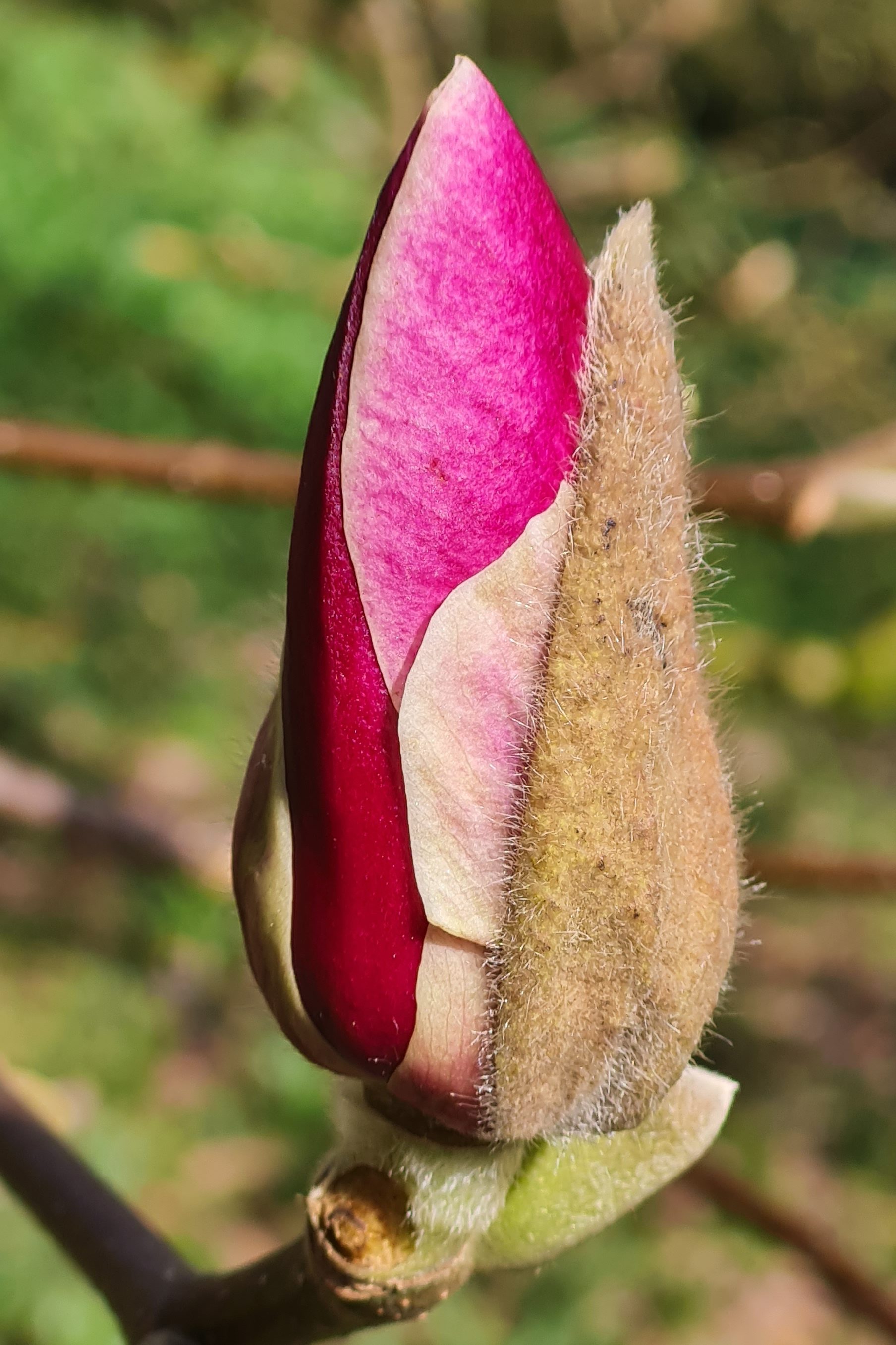
Among the chatter there is life, and death, and, if you listen closely enough, rebirth.
These are the tools for genuine change. The pathways that they might follow are yet to be formed. The people that will journey with us are yet to be met.
No learning can avoid the voyage.
Under the supervision of a guide, education pushes one to the outside.

Depart: go forth. […] In the wind, in the rain: the outside has no shelters.

Learning launches wandering.

(Michel Serra, 2020)
 Regenerative Learning Network