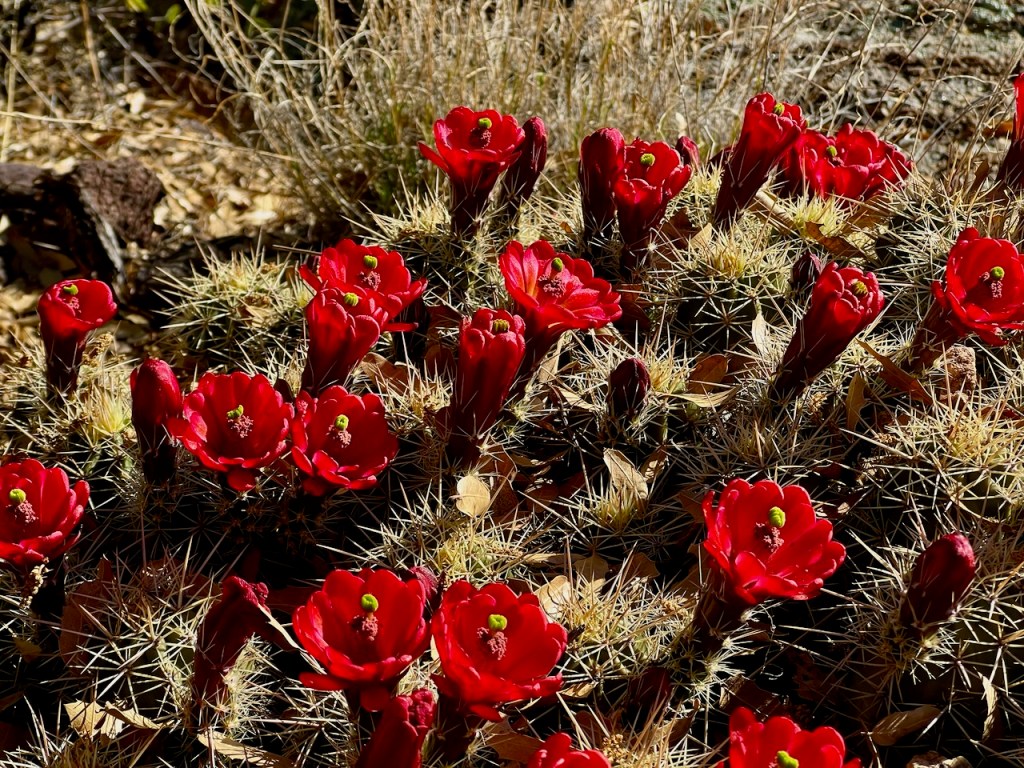
I recently spent an afternoon in the sparse conifer woods and grasslands of northern Arizona — north of the Juniper Mountains, west of the Sycamore Wilderness, at the confluence of the Verde River, Bear Canyon, and Hell Canyon.
At about 4,000 ft above sea level, the base of the canyon is, in April, a welcome verdant respite from the rimlands 400 feet above. It is a coming together of three canyons, albeit only one with year-round water, that drain many square miles from Wagon Wheel and Page Flats, Red Butte, and beyond. The canyons and washes are, as Mary Austin wrote, “essays in miniature at the famed, terrible Grand Canyon, to which, if you keep on long enough in this country, you will come at last.”
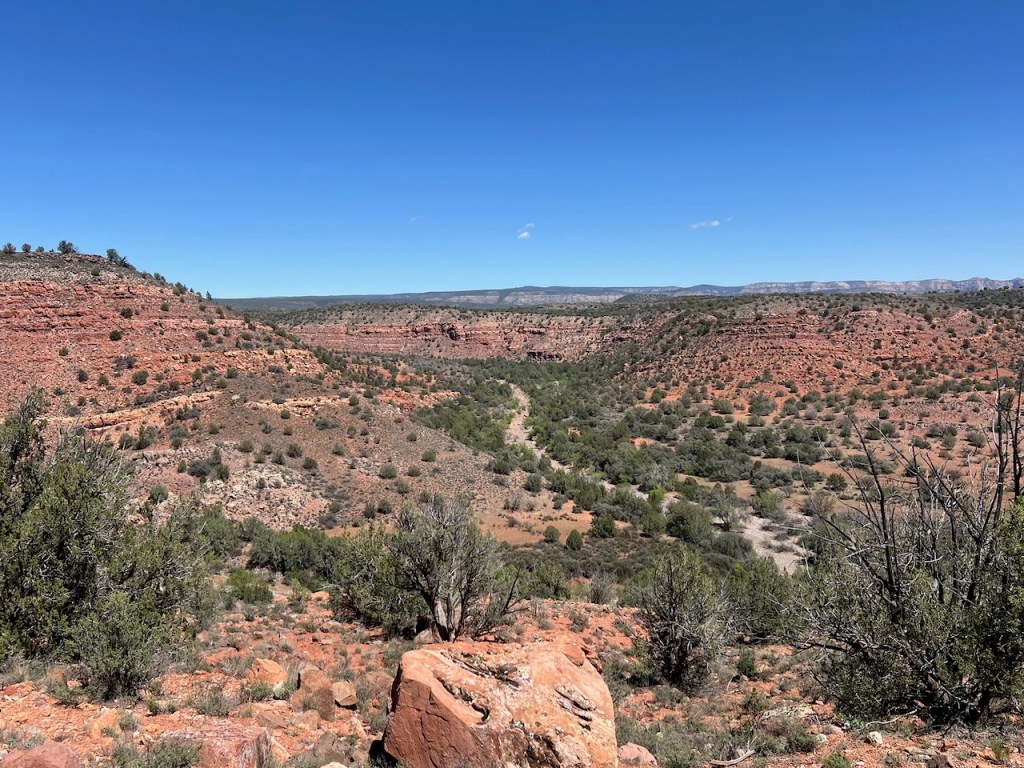
As an essay, Hell Canyon is at once a confluence of gravel riverbeds, biomes, histories, pathways, and place names written over millennia into layers of red sandstone. Mostly, it is a calligraphy of gravel washes and tumbled lava rock, sandstone, granite, and snagged deadwood piled high up against cottonwoods as vestiges of seasonal floods gone by.
Beneath these dry gravel mosaics, moist soils continue to feed trees to surprising stature, to nourish dense meadows that carpet the bottomlands, and even in the warmth of April, emerge in occasional pools.
The river persists.
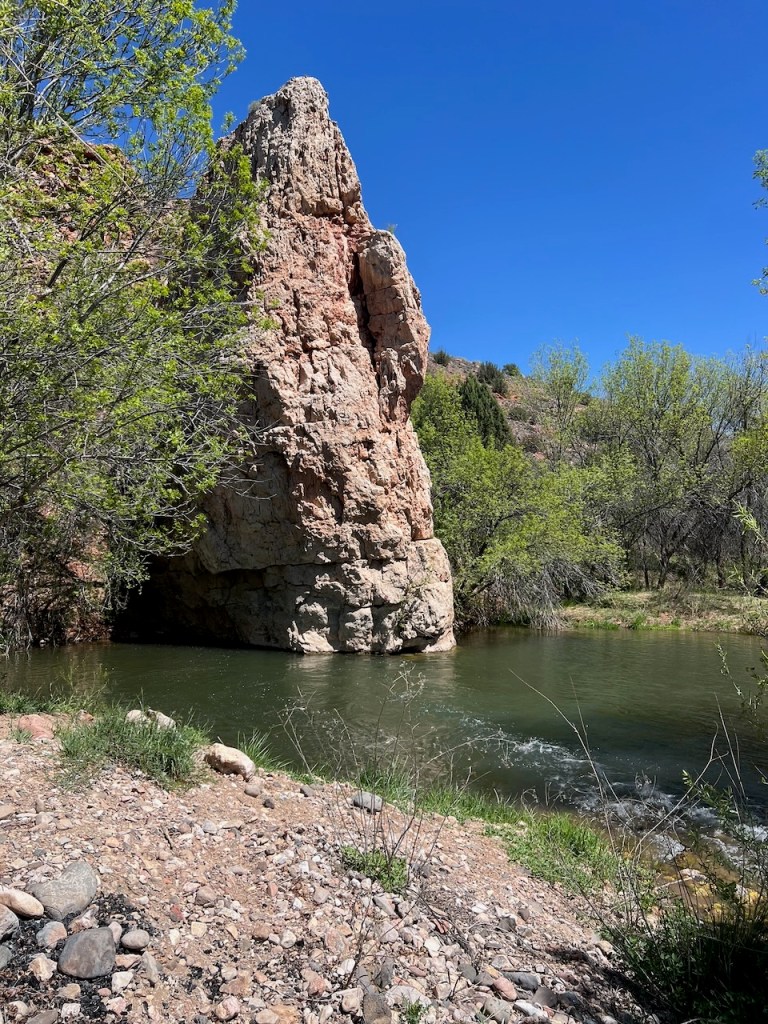
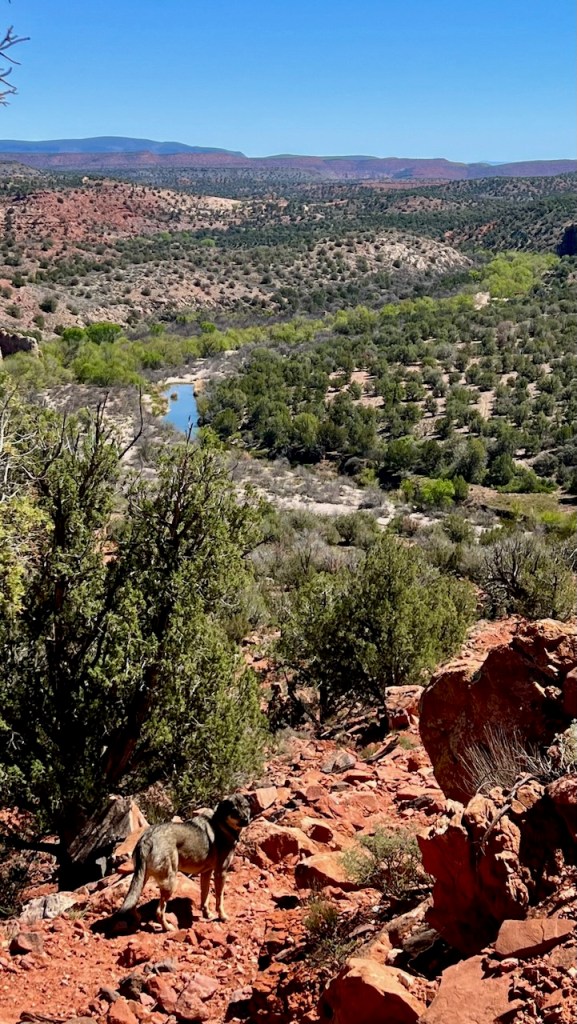
In the bottom of Hell Canyon, however, where the Upper Verde River tumbles into a sandstone buttress and turns sharply eastward, there is a pool of considerable depth — a welcome respite for both me and our dog Rigel — where the narrow flow of the Verde gathers itself as though to regroup before setting out along the next stretch of remote canyon.
The water is always there, deeper underground as we enter the heat of May and June. However, in its absence lies a lesson, not just in confluence, but in interdependence.
“Action is the stream, and contemplation is the spring,” writes Thomas Merton. When rivers run dry, their waters recede into a contemplative state and bide their time to emerge in enactive flows.
Kriti Sharma extends this to make a deceptively simple claim: interdependence does not mean independent things interacting; it means mutual constitution, the coming into being of each thing only through its dependence on others.
This confluence, then, is not merely three canyons meeting in the desert; it is the point at which each canyon becomes what it is by virtue of the others.
The Verde does not arrive at Hell Canyon as a self-contained entity and then tumble into Bear Canyon’s gravel wash. The river is constituted by the wash, by the sandstone buttress that turns it eastward, by the cottonwood roots that hold the bank, by the deep moisture that feeds the meadows even in the absence of visible flow.
Weaving together the visible and invisible, the surface and souterrain, the rivers are both contemplation and action in one.
Thanks to Prescott College senior Rain Bowrys, my good friend and colleague Andrew Schwartz, and Prescott College doctoral students for helping me think through some of these ideas this week.
 Regenerative Learning Network